

What we can do
Four Pledges for Glaciers
Every fraction of a degree of warming prevented preserves ice. Start with systems — and take what applies to your life, your context, your means.
1. Amplify, Act, Help with the just transition from Fossil Fuels
Individual actions matter — but glaciers and the ecosystems they feed cannot be preserved without systemic change. Whatever you're already doing: keep going, and consider what's next. Vote for climate-committed leaders. Urge and help fight for for fossil fuel-non proliferation. Fossil fuels must be justly phased out for glaciers and our and other species wellbeing. Join or deepen your involvement in an organisation such as Glacier Nation. Share a glacier story. Advocate for policy. Collective action moves systems. Individual behaviour, at its best, builds toward that.
2. Move Differently - if you can
Where you have the option, choose public transport, walking, cycling, or train over car or plane. Reduce. Access to alternatives varies enormously by place and circumstance — use what is available to you, and advocate for better options where they don't yet exist.
3. Eat More Plants, Where You Can
Industrial animal agriculture is among the largest sources of global emissions. For those with access and choice, reducing meat and dairy is a high-impact personal action. Food is culture, identity, survival, and tradition — this pledge is for those who have choice, to exercise it.
4. Use Water Wisely
Glaciers feed the rivers that 2 billion people depend on. Shorter showers, fixed leaks, mindful use: small acts that honour the source. Support water justice too — glacier loss hits hardest where responsibility is least, and within those communities, women and girls walk further, wait longer, and lose more when the source retreats.
A few resources:
This is only a start, here’s much more available about glaciers, climate and biodiversity action, art, and more available!
UNESCO Glaciers: Key messages
1. Glaciers and the global water system
Glaciers store about 70% of the world’s freshwater.
Meltwater supports drinking water, agriculture, hydropower, ecosystems, and livelihoods.
Over 2 billion people depend on glacier and snow melt.
2. Rapid glacier loss due to climate change
Glaciers worldwide are retreating because of rising temperatures.
Glacier loss contributes to sea level rise and major changes in polar and mountain regions.
Ice cores preserve important records of Earth’s climate history.
3. Growing risks and environmental change
Melting glaciers and thawing permafrost increase hazards such as floods, landslides, and unstable landscapes.
Deglaciation is creating new ecosystems and changing mountain and polar environments.
4. Action, knowledge, and stewardship
Urgent greenhouse gas reductions are needed to slow glacier loss.
Improved monitoring and research are essential for adaptation and planning.
Glaciers have cultural and spiritual significance for many Indigenous Peoples.
Youth engagement and global cooperation are key to protecting glaciers.
Glacier Nation: Join a global movement that rewrites the future of glaciers.
IPCC: Special Report on the Ocean and Cryosphere in a Changing Climate
Drawdown: The Most Comprehensive Plan Ever Proposed to Reverse Global Warming edited by Paul Hawken
The Secret Lives of Glaciers, Dr. M Jackson
All We Can Save edited by Ayana Elizabeth Johnson & Katharine K. Wilkinson
Ice Geographies: The Colonial Politics of Race and Indigeneity in the Arctic Jen Rose Smith
World Meteorological Organization (WMO) – Annual State of the Global Climatereports include glacier mass balance trends.
Carey, M., Jackson, M., Antonello, A., & Rushing, J. (2016), "Glaciers, gender, and science: A feminist glaciology framework,"Progress in Human Geography.
Global glacier monitoring programs
World Glacier Monitoring Service (WGMS) – The most authoritative global database on glacier mass balance and change; publishes annual global glacier status reports.
Global Terrestrial Network for Glaciers (GTN-G) – Coordinates global glacier observation networks and integrates multiple datasets.
Randolph Glacier Inventory (RGI) – A global, standardized inventory of glaciers used in climate models and IPCC analyses.
Satellite and remote-sensing sources
NASA Earth Observatory and satellite missions such as GRACE, ICESat‑2, and Landsat Program track glacier mass loss and elevation change.
European Space Agency (ESA) missions such as Sentinel‑1 and Sentinel‑2 provide high-resolution imagery of glacier extent and flow.
Research institutes and specialized glacier centres
National Snow and Ice Data Center (NSIDC) – Major U.S. cryosphere data repository with glacier datasets and analysis.
International Centre for Integrated Mountain Development (ICIMOD) – Key research source on Himalayan glaciers.
Arctic Monitoring and Assessment Programme (AMAP) – Arctic glacier and ice-sheet assessments linking cryosphere change to Arctic communities.
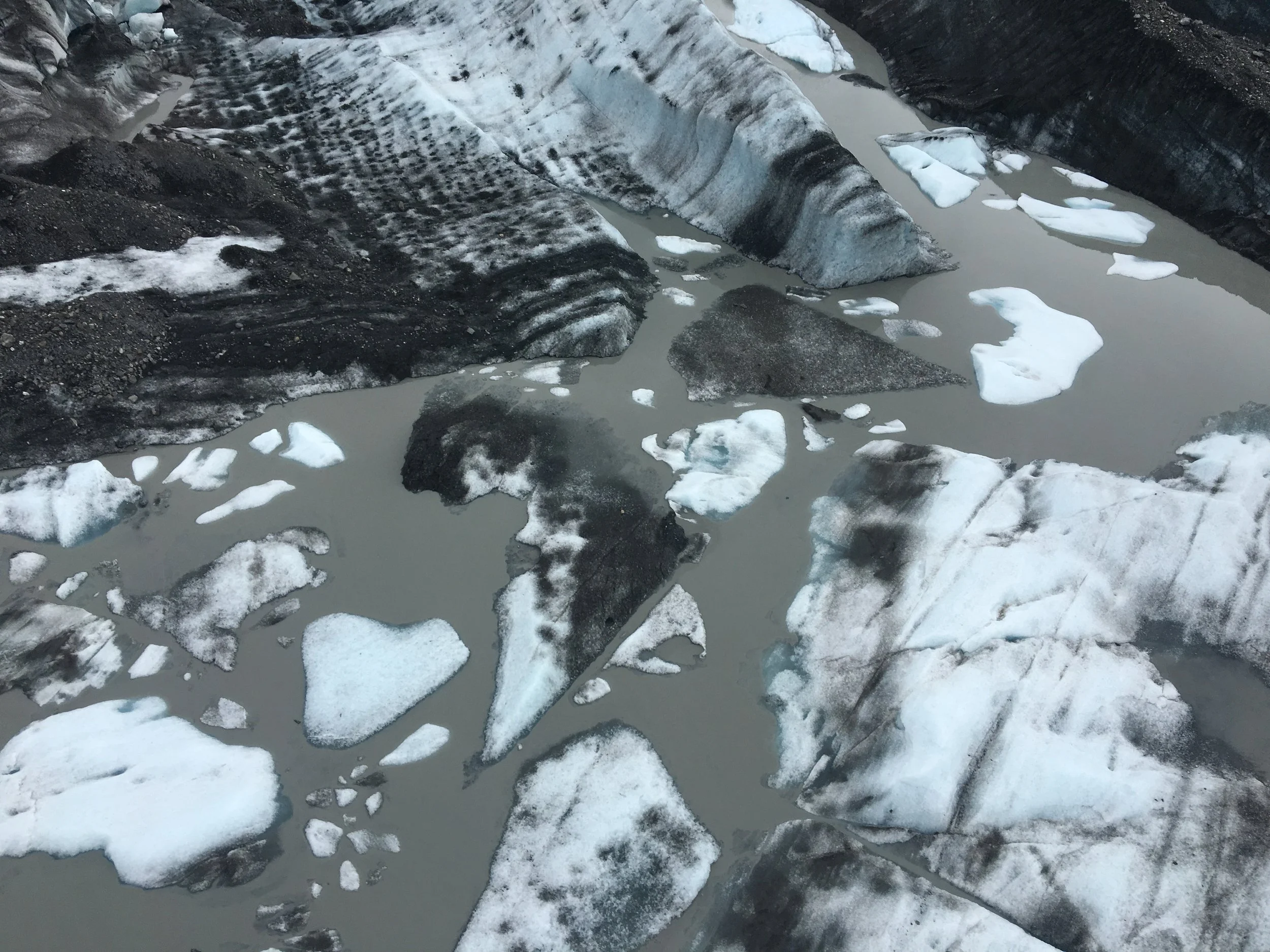
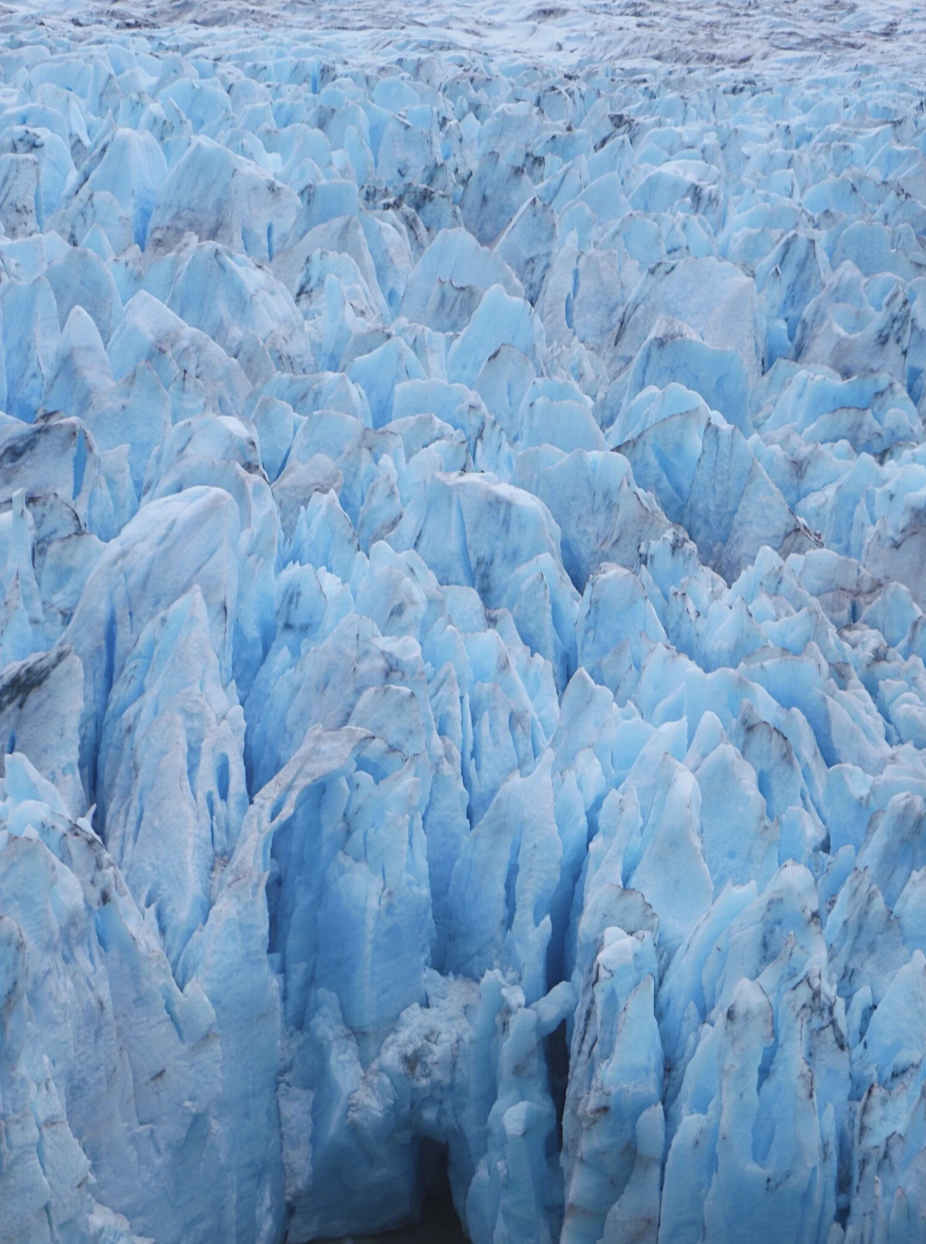
Colony Glacier, Alaska upper image: Carol Devine
lower: Veronica Devine